by Amanda Jacobs-Bissonette
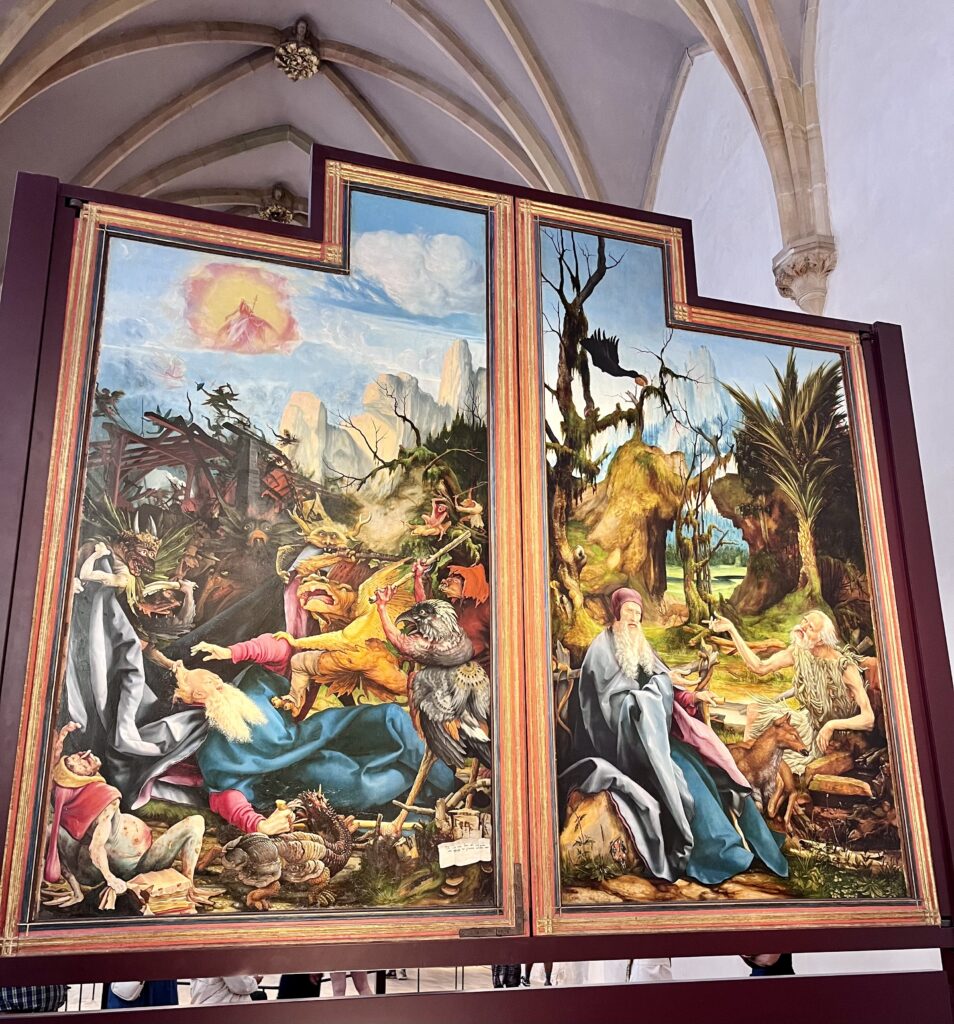
It’s easy to become lost in the appearances of a dying world. Like Saint Anthony beset by demons, I feel the monstrosities of the modern landscape–greed, violence, attack, subjugation, and isolation, among others—pressing in on my consciousness, attempting to hold me firm in the grip of suffering. I just turned 48. Biographically speaking, I am as deep into the material world as I imagine I will ever be in this lifetime. I behold layers and layers of matter, and the visible world is filled with thoughts formed by the past.
What of the future? It arises in darkness, like seeds in soil. It’s forever germinating and our thoughts are shaping it, forming it, now, in the present.
This compels me toward embracing creativity and strengthening my faculty of attention. As Kenneth Smith described so beautifully in his article, Healing Through Art1, creativity reawakens curiosity and interest in the world and re-enlivens the capacities for observation and engagement. In my experience, this is a simple and potent remedy for the malaise earlier described.
Our capacity for attention, as a human, far exceeds what is necessary for material life alone. This human “extra” moves in one of two directions at any time. It either traps us in habits and self-orientation or it turns into abilities and freedom from fixed form. Thinking is at the basis of all we do so it makes sense to begin there, just as Rudolf Steiner suggested in the six basic exercises2. If you’re not already familiar with it, Dr. Michael Lipson wrote a wonderful book, the Stairway of Surprise3, which I used while contemplating what to write for this feature. His observations of the “extra” are shared above3. I also spent some time with Steiner’s lecture “Thought and Will as Light and Darkness” (Colour, Part II, GA 202, 5 December 1920, Dornach)4.
The original idea for this feature was something about flowers and flower pressing. Where I live, in the American Southwest, spring is in full swing and the flowers are abundant after long-awaited rains. I wanted to involve my kids with this feature because they are so much a part of what spring means to me, and because they are talented and fun contributors to any project we work on together. We’ve been pressing flowers together since they were five and the presses featured in these photos are treasures we made when they were in kindergarten5.
My children, like me, sometimes find it difficult to take in and digest many of the rapid-fire impressions of our current world. The uncertainty of what might happen next has the potential to turn nearly any one of us away from curiosity and playfulness and toward self-orientation and self-preservation as we attempt to regain sense and security. Our thinking grows more fixed; worry and anxiety set in. Inspiration dims. Intuition grows fraught with doubt. Imagination becomes afflicted by fear. Our thinking appears out of our control.
By consistently embracing creativity and training our thinking, we develop a better ability to recognize and halt these distracting tendencies, resulting in less suffering. As Lipson points out, “All exercises of consciousness, not just thinking, depend on our continually improving our relationship to distractions”.
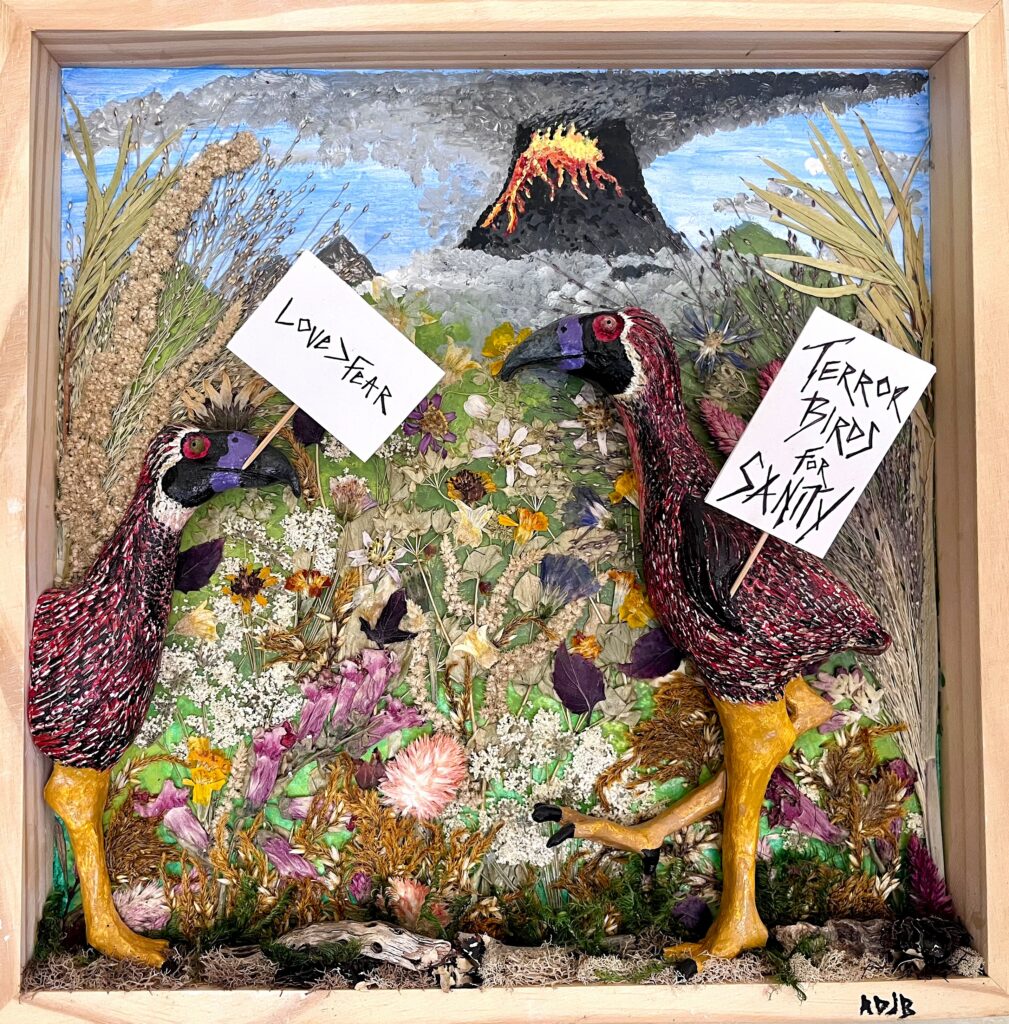
Co-creating this feature required more focus and flexibility than I had anticipated. My son and photographer, Ari, and his sister, Maya, are busy seniors in high school, on the verge of graduation, and already knee-deep in their first year of college via online classes. Committing the time to this activity felt like a monumental task, but we persevered, and the scheduling conflicts fostered opportunity for our theme to develop and change in interesting ways. What started out as a feature about flowers and flower pressing became a contemplative activity. We went outside and observed how buds emerge, swell and open, and the extraordinary range of visual complexity their colors and forms cast. We talked about our perceptions of a dying world and questioned what or who is perceiving. We plucked flowers and pressed them, a beautiful and painful act for any sensitive soul.
Then we took flowers from presses past and used them to create cyanotypes on fabric. Cyanotype is a camera-less photographic process, invented by Sir John Herschel in 1842. It uses sunlight to produce Prussian blue prints. We used a kit that came with several squares of fabric pre-treated with ferric ammonium citrate and potassium ferricyanide4. The cyanotype is what got me thinking more about light and darkness, and vision, and attention, which led me to a day of contemplating Steiner’s lecture and Lipson’s book.
Through this small act of making time to be curious and creative together, we were gifted the chance to look differently at the world around us. We allowed nature to quietly work upon us and bring ease to our minds. We took our carefully considered past forms, our pressed flowers, from the darkness of the press into the light of the sun, where they could be part of something new, beautiful, and intriguing to contemplate.
We hope you enjoy the photos, and even more, we hope you too find moments that invite you out of distraction and into an experience of true presence, enduring curiosity, and happiness that overcomes the world.
Links & Resources
1 Healing Through Art by Ken Smith
2 Six Fundamental Exercises: https://rsarchive.org/Practice/6BasicExercises.html
3 Stairway of Surprise by Michael Lipson: available through SteinerBooks and Amazon
4 Colour, Part II, GA 202, 5 December 1920, Dornach: https://rsarchive.org/Lectures/Colour/19201205p01.html
5 Tutorial DIY Flower Press: https://www.youtube.com/watch?v=sqy3FeH1uus
6 Sunography Cyanotype Fabric Kit ($17 at caseformaking.com)